Displays for bus stops, stations, airports and outdoor public spaces
Transit operators and public-space owners need three things from displays: arrival information at the stop, advertising and notices in vehicles and stations, and screens that keep running outdoors in sun, rain and cold. DisplaySourcing builds electronic bus stop signs, stretched bar displays for buses, 1,500-nit outdoor signage in IP55 cabinets, and touch kiosks for station wayfinding.
What transport hubs & public spaces need from the hardware
- Live data from the dispatch system: vehicle positions and arrival times
- Readable in direct sun and sealed against rain: 1,500+ nits, IP55
- A wide temperature range, with heating in winter and cooling in summer
- Vehicle-grade hardware on buses: shock, heat and interference resistance
- Remote control and site security: scheduled power, cameras, offline playback
Recommended products
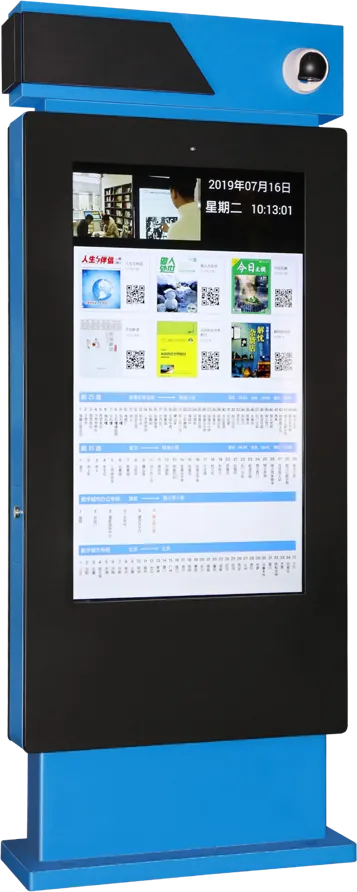
Electronic bus stop sign
Electronic bus stop sign showing route, real-time vehicle position and estimated arrival, plus video ads with an LED ticker. Infrared HD camera, outdoor temperature control, waterproof and dustproof.

Stretched bar LCD
Stretched bar LCD for buses and station platforms: shock-, heat- and EMI-resistant, cloud publishing with time-slot scheduling, SD/USB offline playback.
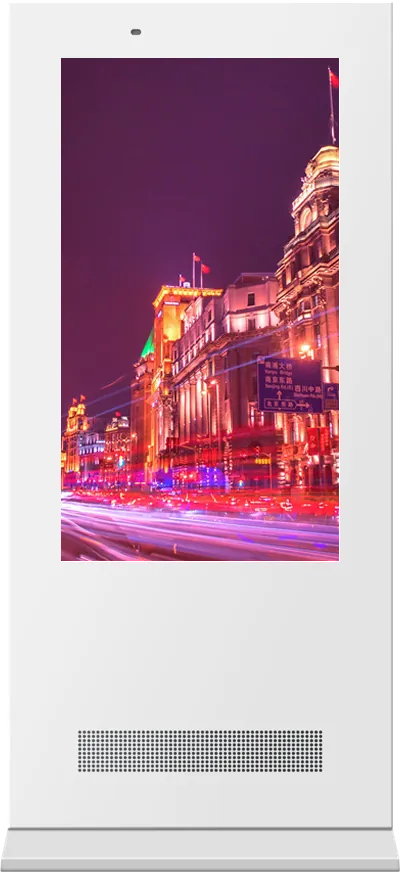
55″ outdoor floor-standing signage
55″ outdoor floor-standing sign for plazas and station forecourts: 1,500 nits with automatic dimming, IP55 galvanized cabinet, −30 °C to +50 °C, three-stage lightning protection.
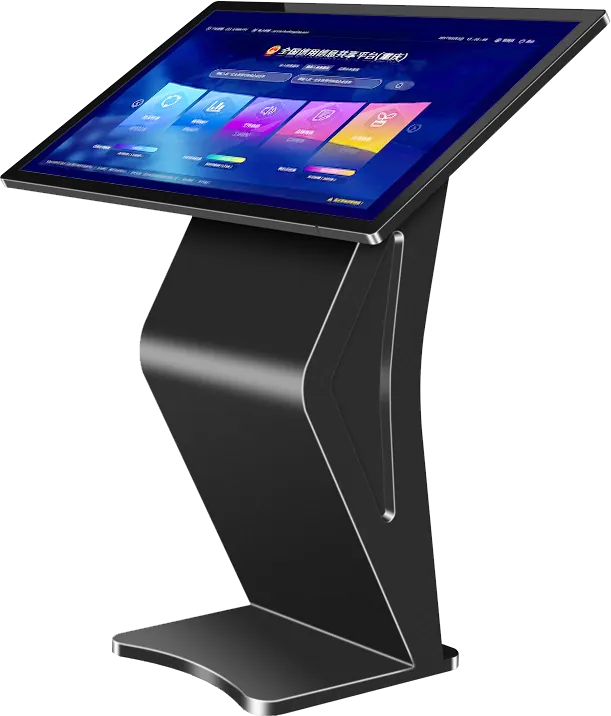
K-shaped tilted touch kiosk
Indoor wayfinding kiosk for stations and terminals: ergonomic tilt for standing users, anti-glare scratch-resistant tempered glass, Android or Windows.
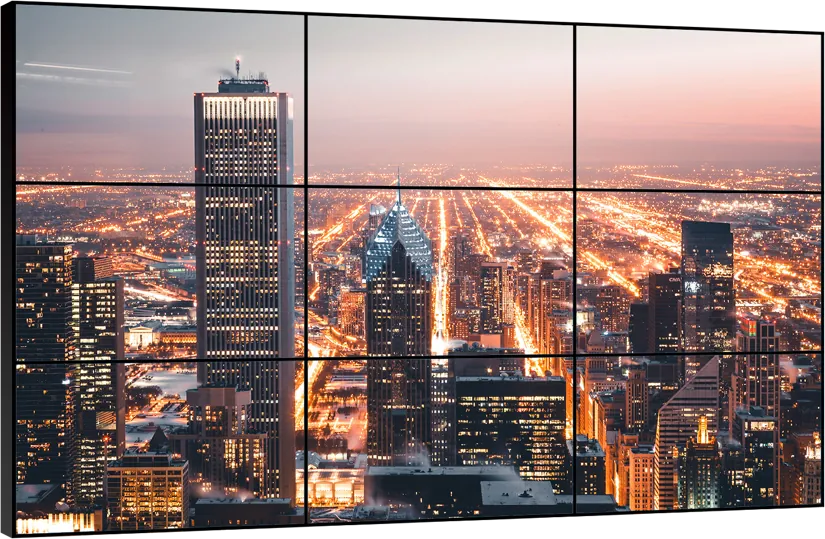
LCD splicing video wall
LCD splicing wall for dispatch and monitoring rooms: 0.88–3.5 mm bezels, windowing and cross-screen roaming, automatic image-retention removal for 24/7 static monitoring screens.
Recommended starting configuration
| Brightness | 1,500 nits fixed · 1,800 nits portable; automatic dimming |
|---|---|
| Protection | IP55; 6 mm tempered glass, AR laminated glass option |
| Cabinet | 1.5 mm galvanized steel, outdoor powder coating |
| Temperature | −30 °C to +50 °C; low-temperature heating, high-temperature cut-off |
| Power protection | Industrial PSU, three-stage lightning protection, leakage breaker, on/off timer |
| Playback | Networked, local or standalone; Wi-Fi or 4G module |
| Options | Touch, LED ticker, camera, light box |
What to tell the factory when you ask for a quote
- Site type and sun exposure for each screen
- Dispatch system and its data interface
- Power available: mains voltage or vehicle supply
- Mounting: base plate, in-ground or on-vehicle
- Lowest and highest local temperatures
- Quantity and network: 4G, fiber or Wi-Fi
At the stop: arrival data first, advertising second
An electronic bus stop sign is a sealed outdoor screen that shows routes, live vehicle positions and estimated arrival times from the dispatch system, and runs advertising around that information.
Our electronic bus stop sign supports split-screen and full-screen mixed playback, timed ad insertion, several on/off periods per day and breakpoint memory after power cuts. An infrared HD camera monitors the shelter, and vehicle positions are synced to the passenger’s phone. The integration that decides the schedule is the dispatch data feed: name your dispatch system and its data interface at the first inquiry.
On board the vehicle
Inside a bus, a 16:9 screen rarely fits. The stretched bar LCD mounts above windows and aisles, resists shock, heat and electromagnetic interference, and plays from SD card or USB when the vehicle is out of network range. Vehicle-grade power and mounting are customized per bus model.
The same bus series includes GPS/BeiDou dual-mode automatic stop announcers with RS232/RS485 ports and 8–40 V wide-voltage input, and Android on-board units that show route, stop and arrival information with advertising over Wi-Fi or 4G.
Stations, plazas and airports
Outdoors, specify by sun, water and temperature, not by screen size alone:
- At least 1,500 nits for direct sun, with automatic dimming at night
- IP55 sealing with gasketed doors and a waterproof speaker
- Smart airflow cooling with a high-temperature cut-off, plus heating for cold starts
- Three-stage lightning protection and a leakage breaker on the supply
The outdoor signage buying guide explains each of these in detail. For plazas and event spaces without fixed power, the portable outdoor poster runs about 14 hours on its 50,000 mAh battery at 1,800 nits.
Concourses and control rooms
Inside stations and terminals, travelers look for platforms, gates and services. Tilted touch kiosks with anti-glare, scratch-resistant glass and 10-point touch carry the wayfinding software; Windows runs existing PC map applications, Android suits new ones.
Behind the network, dispatch and monitoring rooms run LCD video walls around the clock. Choose 0.88 mm bezels for data-heavy screens viewed up close, and use the splicing processor to open windows for camera feeds and maps. Automatic image-retention removal protects panels that show static monitoring layouts all day. The video wall guide covers bezel width, processors and viewing distance.
Frequently asked questions
Can bus stop displays show real-time arrivals?
Yes. Connected to the dispatch system, the sign shows vehicle positions and estimated arrival times alongside advertising, and syncs positions to passengers’ phones.
How bright should outdoor transit signage be?
At least 1,500 nits for direct sun. Our fixed outdoor model runs at 1,500 nits in an IP55 cabinet and dims automatically at night.
Will outdoor screens work in winter?
The fixed outdoor model is rated from −30 °C to +50 °C, with a low-temperature heating module that starts automatically and a high-temperature cut-off.
Can bar displays be installed on buses?
Yes. The stretched bar LCD is built for buses: it resists shock, heat and electromagnetic interference, and power and mounting are customized to the vehicle.
Tell us what you need built
Send a size, a sketch or a reference model. You get a spec sheet and factory price from an engineer, usually within one working day.
To get an accurate quote, tell us
- Product type and screen size
- Quantity and target market
- What to customize — logo, color, peripherals, software
- Your timeline
- Reply from an engineer within one working day
- Spec sheet and factory price, not a sales script
- Drawings can be protected under NDA